
Chile Cup. Statistics play-off round: fixtures, odds and betting markets
⚽ What Chile Cup. Statistics play-off round is and what the season decides
Chile Cup. Statistics play-off round is a football competition with its own entry rules, its own calendar and its own way of crowning a winner, and this page gathers every fixture it puts up. Anticipation runs high whenever two strong sides are set to meet, and the countdown to the start is half the thrill. Nothing from other countries or other divisions mixes into the list you see here. As the rounds go by, an edition builds its own numbers, from individual leaderboards to running streaks and broken records, and those counters close with it. Reading that framing once makes the odds beside each match far easier to judge.
Every tournament answers a question by the time the last whistle goes. Once the title is settled, records take over: points totals, unbeaten runs or single-edition bests give real content to rounds the table no longer animates. A title, a qualifying slot or plain survival changes how carefully a squad treats a fixture in the middle of the schedule. The depth of the betting line mirrors an event's standing: marquee competitions open dozens of detailed markets, while a minor one gets by on the basic offer. The level also decides how much public data exists on each side, and that shortage is exactly where prices drift.
A mid-season table compares participants who have not played the same number of meetings; points per meeting tell the truth that the raw position hides. Opening rounds carry more surprises than closing ones, because squads are still finding their shape. When a tournament runs a group phase before the knockout bracket, the closing group matches are not equal: a side already through plays nothing like one staring at elimination. A trophy decided over a long table gives the draw a very different value than a trophy decided in a bracket. Once ahead, a league side tends to shut the game down and manage what it holds, because the result already in hand outweighs the extra one waiting at the other end of the pitch. Check the structure once at the start and the whole calendar becomes readable.
In mid-table, where neither prize nor danger remains, coaches loosen the reins, hand minutes to academy players, and games suddenly open up in a way they never did earlier. Promotion, relegation or a continental place gives late fixtures a weight that a plain form table never shows. Sides already safe play with a freedom that sides still counting points cannot afford.
📅 The calendar: when Chile Cup. Statistics play-off round matches run

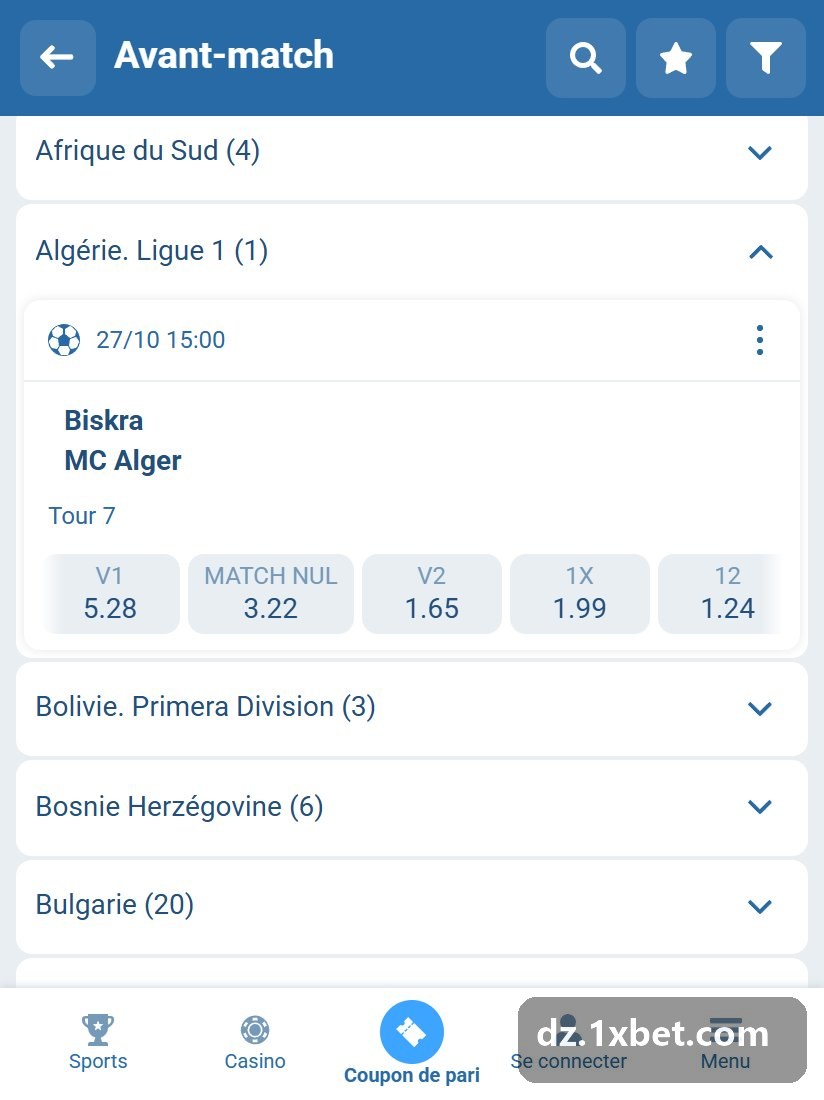
For a competition held abroad, the host country's clock never has to be worked out: the listing already speaks in Algerian time, seasonal shifts included. Kick-off times appear in Algerian local time on this page, so nothing has to be converted by hand. When a competition stops for its mid-season break, the restart reshuffles everything: momentum built before the pause does not always survive the return. Some rounds land midweek, others fill a weekend, and that density decides what a squad is physically able to do. Planning around the rhythm works better than reacting to it on the day.
Card depth follows the stakes: a final receives a far richer offer than a preliminary tie, with markets that appear at no other point of the season. Early prices stay thinner and widen once team news arrives. Even with the fixture list empty, season-long positions stay open, and during the stoppage the page runs on the long term rather than on the day-to-day. International windows and cup weeks cut the flow, and the first fixture after a pause rarely resembles the last one before it. When Chile Cup. Statistics play-off round has no round at all, the evening schedule for every sport sits on the main page of the site.
Markets on Chile Cup. Statistics play-off round: what you predict and when
There is far more to wager on here than the final result. Each card opens with the basics and then unfolds into hundreds of lines. This core covers one meeting at a time; positions on the competition's overall winner live elsewhere, on the long-term page. Match result, totals and both teams to score cover most of what a fan actually wants to back. From one fixture to the next the blocks keep the same order on the card, so anyone who knows the architecture finds a given entry within seconds, even among hundreds of lines. Corners, cards, halves and player lines sit deeper in the card and usually fill up closer to kick-off.
Fresh news about fitness, travel or a congested run of dates points to specific blocks of the list rather than to the winner itself, which the price has already absorbed. A market you understand pays better than a market with a bigger number next to it. Entries taken on one and the same meeting are not independent; the coupon multiplies prices but not chances, and a single contrary turn wipes out the whole group at once. Rare lines tempt on quiet rounds, yet they need information that smaller competitions never publish. The table groups the families you meet most often on this tournament.
Market | What you predict | When it fits |
|---|---|---|
1X2 | Home win, draw or away win | Two sides of clearly different strength |
Double chance | Two of the three outcomes at once | An away side you trust only halfway |
Total goals | Goals above or below a set line | Attacking form is clearer than the result |
Both teams to score | Whether each side finds the net | Two leaky defences meeting each other |
Handicap | The result after a virtual head start | A heavy favourite priced too short |
Corners and cards | Counted events instead of the score | A tense fixture where goals look scarce |
Each family asks a different question about the same ninety minutes. Pick the question you can answer from the standings, the schedule and the team news, and leave the rest of the card alone.
How a Chile Cup. Statistics play-off round match moves the price
Every break spawns interval markets beside the main line: the next period starts with prices of its own, clean of everything accumulated so far, and reads like a small contest in itself. One goal rewrites every line on the card within seconds. In football the score is never final until the last whistle; one late strike can rewrite the correct-score line and push the total the other way, and following it live is where the real openings appear. An early opener, a sending off or a stubborn goalless half each push the market in a direction of its own. Count the changes each side still holds: the camp with moves left can still redirect its endgame, while one that has used everything must finish with what is already out there. How fast a price settles after an incident shows how confident the traders feel about it.
A goal against the run of play splits the match into two truths: the pitch tells of dominance, the board shows the opposite, and the price ends up wedged between the two readings. Substitution windows, the restart after the break and the closing ten minutes carry most of the movement. An equaliser drags the 1X2 back towards where it opened, but not the total: two goals are already on the board, and that line never climbs back down. Goals never spread evenly across a match, and totals react hardest when the first one arrives early. Scheduled interruptions, between periods or during an official break, also close part of the offer: the line covering the remainder is rebuilt before it goes back on sale. Frozen lines come back once play restarts, and that pause usually signals an incident still being priced.
Cards cluster late: heavy legs, tactical fouls to stop a counter before it starts, and clock management that irritates the referee a little more with every stoppage. Refereeing style differs from one competition to the next, and card totals follow it closely. Corners bunch up after the break: the trailing side goes wide, crosses multiply, and the corner count accelerates through the second act. Splitting the match into halves turns one large question into two smaller ones.
A cleared corner does not kill the danger: the second ball drops at the edge of the box, where a strike arrives at full pace, and plenty of goals grow out of that rebound rather than the original delivery. Corners and free kicks settle plenty of tight games where open play stays blocked. A change made straight after the restart is an emergency correction: the coach rejected what he saw before the interval and refuses to wait for it to sort itself out. Fresh legs after the hour mark often decide whether a late total lands.
What to check before betting on Chile Cup. Statistics play-off round

In front of its own crowd, a favourite under scrutiny sometimes plays tight: every loose touch draws a murmur from the stands, and home pressure turns a theoretical advantage into a real burden. A team with nothing left to chase behaves differently from one fighting for a place. A packed, hostile arena does not press on everyone alike: those used to big occasions settle quickly, while young or inexperienced entrants lose their bearings from the opening exchanges. Pitch quality, travel distance and crowd size all hide behind the venue line in the fixture list. Crowd backing has a reverse side, for when the score refuses to come the stands grow impatient, home players tighten up, and mid-table sides often breathe easier away from their own pressure. Home advantage varies enormously between competitions, and treating it as a fixed value costs money over a season.
The first outing after a streak ends reveals more than the streak did, as some groups restart at once while others take weeks to recover. Recent results say more than season averages once the calendar gets crowded. After a long journey and a demanding game, the next match often starts at a low tempo: the ball is held, restarts are slowed down, and runs are rationed. A side playing every third day cannot press for ninety minutes whatever the table claims. In a deep group the absence of a key man gets shared out among several players, while a short squad looks for one replacement expected to do all of it alone. Depth decides who survives that schedule, and it shows up after the break rather than before it.
A rising offside count betrays constant running in behind, and, in the negative, the high line the opponent keeps daring to hold. Shots, possession and expected goals answer separate questions, so they work only when read together. Counting chances is worth less than weighing them: a strike from close range and a run of half-chances from distance describe two completely different matches. A flattering average often hides two heavy defeats and a run of quiet draws. The immediate context outweighs reputation: a participant backing up after a long trip or a midweek battle that went the distance is not the one its averages describe, and that detail sits in the calendar rather than in the stats. The obvious favourite in a small tournament is priced by a crowd that follows only the famous names.
Clubs hold back news about their goalkeepers, sometimes until the team sheets appear; the useful information therefore lands shortly before kick-off rather than the day before. A goalkeeper change between rounds moves clean sheet and total lines more than most line-ups suggest. In hard cold the ground stiffens and muscles answer badly: openings are cautious, footing slips on the first strides, and the intensity only arrives once bodies are warm. Heat, rain and wind slow a game down, and totals drift as soon as the forecast is public. Both details reach the fixture page long before kick-off, which is the whole point of looking early.
How to place a bet on Chile Cup. Statistics play-off round
Type the stake in and the potential return appears next to it. The route from this page to a confirmed slip takes under a minute once the account is ready. Picking a date in the calendar narrows the display to one day at a time, and everything scheduled before or after it leaves the screen until the filter is lifted again. A wider view of the sport, with every tournament in one list, waits at all football competitions.
Sign in to your account, or open an account if this is your first coupon.
Open the Chile Cup. Statistics play-off round fixture list on this page and choose the match you want.
Tap the odds beside a market to send that selection into the slip. A coupon has no single-sport rule, and the same accumulator takes a football line, a tennis line and a basketball line side by side. The slip stays open while you keep browsing other fixtures.
Type your stake in DZD and check the possible return shown under the field.
Confirm the bet. A meeting about to start switches over to live, at which point pre-match positions stop applying, so the time shown on the line is worth checking before validation. The selection then moves into your bet history for later reference.
Adding a second selection turns the same slip into an accumulator, and the total price multiplies instead of adding up. Removing a leg before confirmation costs nothing, so read the final odds before the last tap.
Pre-match and live: two different approaches
The closing price gives the pre-match bettor a yardstick to measure his entries against; in-play offers no comparable fixed point, since every second carries its own price. Time separates them: before kick-off you compare at your own pace, after it you decide inside a few seconds. A pre-match total is a forecast; in play it rests on the score already posted and the time left. Preparation pays in the first case and attention pays in the second. The market names look identical in both, and that similarity catches out plenty of newcomers.
When a round stretches over several days, the first results already played reshape the stakes of the remaining fixtures, and pre-match leaves time to factor that in. Odds published days ahead carry assumptions that a single injury bulletin can destroy. In-play football makes every attack matter, as odds rise and fall with each shot and counterattack. Watching live football markets next to the pre-match list shows how far a number has travelled since it opened. Comparing those two prices is the cheapest lesson available on this page.
💳 Deposits, app and support for Algerian bettors
Once the operation goes through, the balance refreshes on the same page, so there is no reason to reload the site or walk back through the main menu just to confirm it landed. Accounts in Algeria are funded through BaridiMob, RedotPay, BinancePay and USDT, with the balance kept in dinars. A withdrawal begins as a request filed from the account area; it goes through a check of the account first, and only then is the sum credited to the channel on file. Withdrawals travel back along the route used for the deposit, which keeps the checks short and predictable.
Method | Type | What it suits |
|---|---|---|
BaridiMob | Bank transfer | Everyday top-ups in DZD from an Algerian account |
RedotPay | Bank transfer and card | A quick top-up minutes before a Chile Cup. Statistics play-off round kick-off |
BinancePay | E-wallet | Moving funds without opening a bank app |
USDT | Cryptocurrency | Balances held outside the dinar, on Tron or BSC |
The app reopens where you left it. The last section you were in comes back on its own, sparing a trip through the menu at every single launch. The mobile app carries the same fixture list, the same card and the same cashier as the desktop site. Get the app on your phone in just a few taps. A kick-off alert on the phone helps when a round starts in the middle of a working day.
Before reporting a frozen display, reload the page or open it in another browser: a good share of visual glitches vanish right there, and whatever survives genuinely deserves a message. Chat and email answer in the language of the version you are reading. New players are never left on their own: the support staff walks you through the first steps, from setting up an account to placing an early bet. Settling a payment question before the round starts spares you from watching the clock while a match runs.
Following Chile Cup. Statistics play-off round through the season
Current form counts for less than usual, because a side deep in a bad run lifts itself for one evening when the opponent is the neighbour it cannot afford to lose to. Local rivalries break form patterns, and the price on those days reflects the crowd as much as the standings. Neighbours who meet twice a year bring history that no statistic covers.
Start dates and times get shuffled during a season, between postponements and rescheduling, and the page carries the current slot where a two-week-old memory of the calendar does not. Saving this page keeps the next round one tap away, while the full pre-match section shows what else runs on the same evening.
The simplest move is to set your own reading of a fixture against the price shown next to it, and the page puts both side by side. Seasons finish, tables reset, and the same address carries the new campaign without changing. A balance topped up through BinancePay or Skrill 1-Tap is ready before the price moves. Fixtures for the coming round appear here as soon as the organisers confirm them.